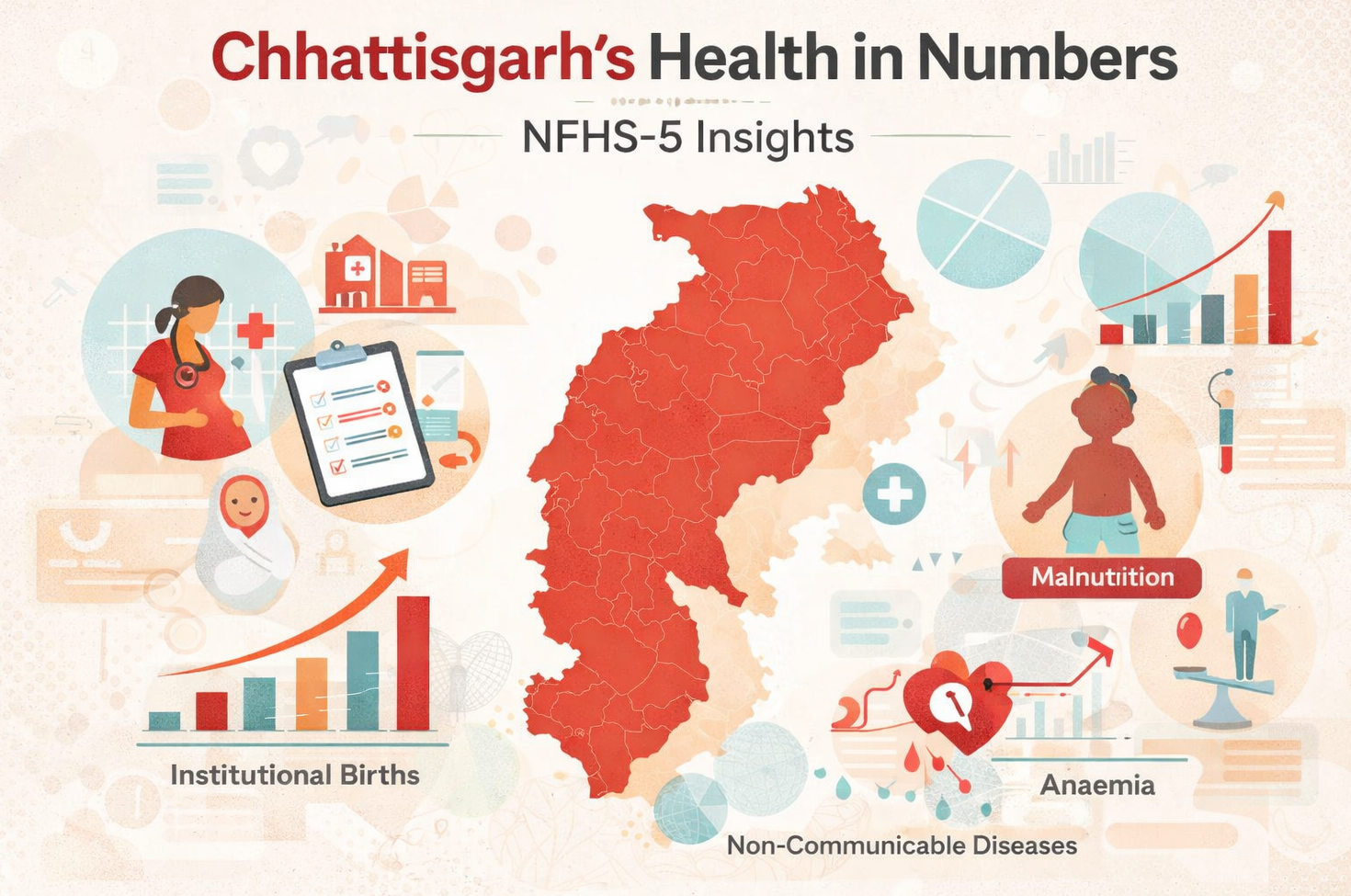
According to the National Family Health Survey (NFHS-5), Chhattisgarh’s health data presents a story of progress alongside persistent challenges when compared with the National Family Health Survey (NFHS-4).
Chhattisgarh has witnessed significant improvement in institutional deliveries over the past five years, but rising anaemia levels and persistent malnutrition continue to pose serious public health challenges.
Institutional births increased from nearly 70 percent in 2015–16 to 86 percent in 2019–21 a growth of 16 percentage. Skilled birth is also improved during this period. Health experts attribute this progress to expanded maternal health services and the grassroots outreach of the Accredited Social Health Activist (ASHA) initiative under the National Rural Health Mission. ASHA workers have played a key role in identifying pregnant women, encouraging antenatal care, and promoting safe hospital deliveries, particularly in rural and tribal areas.
However, improvements in healthcare access have not fully translated into nutritional gains. Stunting among children under five decreased from 38 percent in NFHS-4 to 32 percent in NFHS-5, while the proportion of underweight children fell from 37 percent to 31 percent. Wasting also reduced from 23 percent to 19 percent. Although these indicators show gradual progress, nearly one in three children in the state remains undernourished.
Anaemia presents the most concerning trend. Among children aged 6–59 months, anaemia prevalence rise sharply from 41 percent in NFHS-4 to 67 percent in NFHS-5. Among women aged 15–49 years, it increased from 47 percent to 61 percent. This rise indicates persistent iron deficiency, gaps in dietary diversity, and challenges in supplementation coverage.
The NFHS comparison reveals a dual reality for Chhattisgarh: expanded institutional healthcare access alongside fragile nutritional security. Experts suggest that the next phase of public health intervention must move beyond increasing hospital deliveries to strengthening iron supplementation, improving dietary practices, and enhancing community-level nutrition programmes to ensure sustainable health outcomes.
