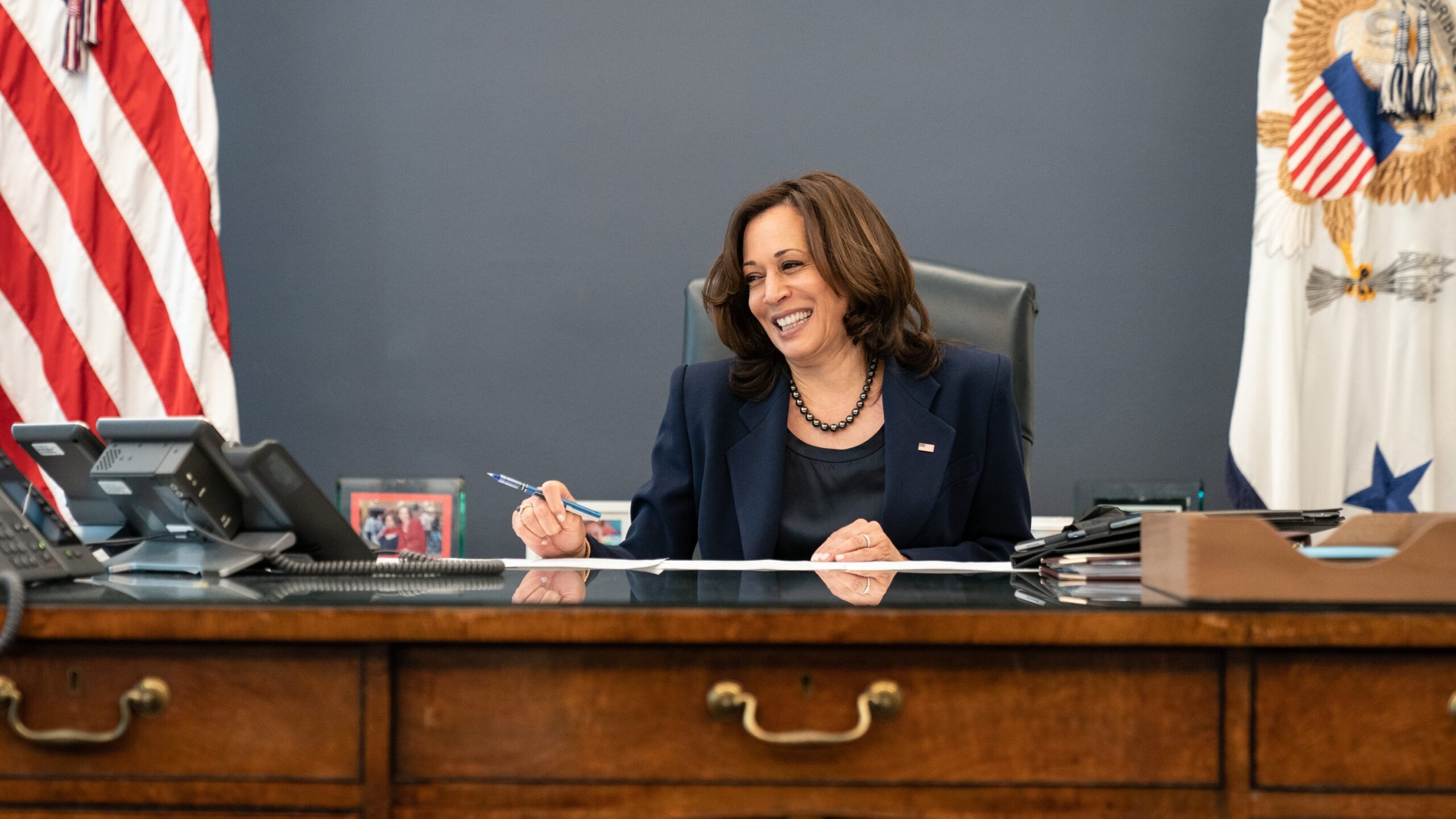
Kamala Harris’s Historic Nomination Highlights the Complexities of Identity Politics in the 2024 US Election
The 2024 US election has brought identity politics to the forefront, with Kamala Harris’s candidacy serving as a focal point for this intricate and frequently contentious issue. As a biracial black and South Asian woman, Harris embodies the overlapping aspects of her identity that have become more important in American politics. Her presence on the ticket has amplified discussions about representation, diversity, and the role of personal identity in shaping political landscapes.
The focus on Harris’s identity in the 2024 election reveals both the progress and limitations of American democracy. Her candidacy, exemplified by becoming the first black and South Asian female presidential nominee, signifies a significant achievement in terms of representation and mirrors the shifting demographics of the country. On the other hand, the emphasis on her identity risks reducing complex political issues to simplistic identity-based narratives.
Overview of Kamala Harris’s Background and Her Rise in American Politics
Kamala Harris’s political career is inextricably linked to her biracial identity as a black and South Asian woman, a dual heritage that both propelled and complicated her rise. Harris had a privileged upbringing full of significant academic and professional opportunities thanks to her Jamaican father, Donald Harris, and an Indian mother, Shyamala Gopalan, a pioneering breast cancer researcher and civil rights activist. This high-profile background undoubtedly facilitated her navigation through various cultural and political spheres.
While attending Howard University, Harris strengthened her ties to her black heritage, but her performance as California’s Attorney General has been heavily criticized. Critics argue that her policies during this period often contradicted the principles of the civil rights movement she claims to champion. Moreover, her formative years in predominantly white spaces, including Canada, have sparked debate about her authentic engagement with the communities she represents.
Despite these controversies, Harris has achieved notable milestones: she became the first black and female Attorney General of California, a U.S. Senator in 2017, and, after a failed 2020 presidential run, the Democratic Party’s presidential nominee in 2024. Her campaign’s record-setting fundraising—$310 million in July, double the contributions raised by Trump during the same period—highlights the significant financial backing that identity politics can command.
However, Harris’s candidacy also underscores the pitfalls of relying on identity politics. While her role as the first black and South Asian female presidential nominee represents a notable shift in American political representation, it has not been without criticism. Accusations of tokenism and skepticism regarding her progressive credentials, such as her selection as a vice-presidential candidate to appeal to specific demographics, suggest that her identity might be leveraged more as a strategic asset than as a genuine representation of policy commitment. This duality raises pressing questions about whether Harris’s ascent marks authentic progress or merely a superficial nod to diversity that risks sidelining substantive policy reform.
The Historical Significance of Her Role as the First Female, Black, and South Asian Vice President in 2020 and presidential nominee in 2024
Kamala Harris’s appointment as the first female, black, and South Asian Vice President marks a historic breakthrough in American politics, symbolizing progress in a traditionally white-dominated arena. While her election represents a significant victory for the communities she embodies, it also reveals a complex narrative. Harris’s rapid ascension to the Democratic presidential nomination following Joe Biden’s withdrawal underscores the party’s emphasis on diversity as a strategic asset. However, it also highlights a troubling reliance on identity politics, suggesting a lack of viable alternatives within the party.
The contrast between Harris and Donald Trump starkly illustrates the polarized nature of American political identity. Harris represents a forward-looking, inclusive vision, while Trump appeals to traditional, often exclusionary notions of American identity. This juxtaposition not only deepens electoral divides but also amplifies societal rifts around race, gender, and national identity. Therefore, her groundbreaking role not only signifies substantial progress but also emphasizes long-standing divisions, posing a challenge to the core of representation and the nation’s trajectory.
The Triple Effect: Women, Blacks, and South Asian Votes
Kamala Harris’ candidacy marks a milestone for women in politics, as 57% of women supported the Biden-Harris ticket in the 2020 election compared to 42% for Trump. Although praised for her empathetic and resilient leadership, there are doubts about whether her focus on women’s issues translates into meaningful policy reforms. Despite Harris’s groundbreaking role, the focus on gender may overshadow crucial policy debates, as seen in the 2020 election, where only 19% of voters cited gender as a key factor.
Kamala Harris’s influence on black voters presents a complex and often contradictory narrative. Her record as a prosecutor, marked by decisions perceived as perpetuating systemic injustices, contrasts sharply with her current advocacy for racial justice, raising concerns about the authenticity of her commitment and the potential for political expediency to overshadow genuine reform efforts.
While her lived experience as a black woman in America provides a unique perspective, it’s debatable whether this alone qualifies her to address the multifaceted challenges facing the black community. Her connection to historically black colleges and universities (HBCUs), though culturally significant, might divert attention from pressing policy issues affecting black Americans.
In the 2020 election, Harris helped secure 87% of the vote for Biden. However, her past as a prosecutor supporting controversial policies continues to raise questions about her dedication to racial justice. Although her personal experiences resonate with many, translating this into genuine reform remains uncertain, particularly when 81% of black Americans view systemic racism as a significant problem and are divided on Harris’s role in addressing it.
Kamala Harris’s Indian background creates a deep bond with Indian-American and South Asian communities, illustrating the nuances of identity politics in a diverse country. Her vocal pride in her Indian roots resonates with many, but she risks alienating other groups and oversimplifying the diverse experiences within the South Asian diaspora.
Harris’s prominence has energized the South Asian community, with a Pew Research Center survey noting a 10% increase in political engagement among Indian-Americans following her nomination. However, this identity-based enthusiasm risks overshadowing informed policy discussions. A 2020 AAPI Data Survey found that only 18% of South Asian voters prioritized specific policy issues over ethnic representation in their voting decisions.
While Harris’s influence encourages civic participation, it underscores the challenge of balancing identity politics with substantive policy alignment, potentially undermining informed democratic participation.
Minority Voters and Coalition Building
The Democratic Party’s strategy of leveraging Kamala Harris’s diverse identity has shown both electoral benefits and limitations. For instance, Harris’s background helped boost engagement among minority voters, with Indian-American voter turnout rising by 10% following her nomination. However, this focus on identity-driven outreach sometimes overshadows detailed policy discussions. During the 2020 campaign, her personal story was emphasized over specific policy proposals, which some critics argue may have led to a lack of focus on pressing issues like criminal justice reform and economic inequality. Additionally, the emphasis on symbolic representation risks reinforcing political divides and creating the perception that minority groups are targeted more for their electoral value than for substantive policy solutions. Harris’s evolving positions on issues such as criminal justice reform have also sparked debates about the authenticity of her progressive stance, questioning whether her current policies reflect genuine commitment or strategic adaptation.
The Biden-Harris campaign’s strategy of leveraging Kamala Harris’s identity to mobilize minority voters underscores the central role of identity politics in modern campaigns. While this approach has yielded impressive short-term results, such as increased voter turnout among specific demographic groups, it also presents significant challenges.
The campaign’s heavy emphasis on identity politics risks creating echo chambers, where voters are reinforced in their existing views rather than engaging in cross-group dialogue, as the focus on identity can limit diverse perspectives and interactions. By focusing on Harris’s diverse background, the campaign may inadvertently deepen political divides and foster a sense of division rather than unity. This identity-centric strategy can lead to a superficial engagement with voters, prioritizing symbolic representation over substantive policy discussions.
Furthermore, the use of identity politics as a primary engagement tool highlights a transactional aspect of contemporary campaigning, where demographic groups are courted primarily for their electoral value. This approach can obscure the need for comprehensive policy discussions and risk reducing complex political issues to mere identity-based narratives. As a result, while the strategy might achieve immediate electoral gains, it could undermine efforts to address systemic issues and promote inclusive, meaningful reform.T
Identity and Political Positions: A Double-Edged Sword
Identity politics has a profound impact on American democracy, shaping both electoral strategies and public discourse. The Biden-Harris campaign effectively leveraged Kamala Harris’s diverse background to mobilize minority voters, leading to notable increases in turnout among specific demographics. However, this approach also presents significant challenges. While identity-based campaigning can engage targeted groups, it risks deepening political polarization and reducing complex issues to mere symbols rather than addressing substantive policy concerns.
Harris’s role, as a black and South Asian woman, has strategic advantages in appealing to diverse voter bases. Yet, this emphasis on her identity can overshadow her substantive policy proposals, potentially reducing her to a symbolic figure rather than a leader with concrete solutions. Her shifting stances on issues like criminal justice have raised questions about the authenticity of her progressive commitments and her core values.
Opponents often frame Harris’s identity as a liability, reflecting underlying anxieties about changing demographics and shifting power dynamics. This framing highlights the contentious nature of identity politics, where criticisms can stem from genuine policy disagreements or deeper discomfort with demographic shifts. Harris’s candidacy challenges traditional notions of leadership and representation, demonstrating the growing importance of intersectionality in political strategy while also exposing the risks of oversimplifying governance. Balancing identity-driven appeals with meaningful policy discussions remains a critical challenge in navigating the contemporary political landscape.
Opponent Strategies and the Framing of the Biden-Harris Ticket
Former President Donald Trump frequently leverages Kamala Harris’s identity as a point of contention, framing it as a liability in his criticisms of the Biden-Harris ticket. Trump’s strategy involves emphasizing Harris’s background to challenge her credibility and appeal. He often portrays her identity as part of a broader critique of the Democratic Party’s focus on identity politics, suggesting that it distracts from substantive policy issues and highlights what he argues are failures in addressing the real concerns of the American electorate.
Trump’s rhetoric typically underscores the perceived divisiveness of identity politics, arguing that it exacerbates social and political divisions. By focusing on Harris’s identity—such as her race and ethnicity—Trump aims to tap into broader anxieties about changing demographics and shifting power structures. His framing suggests that the emphasis on identity politics is part of a Democratic agenda that, in his view, undermines traditional values and promotes division rather than unity.
This approach reveals a deeper tension within American politics regarding the role of identity. While some of Trump’s criticisms may stem from genuine policy disagreements, they also reflect discomfort with the evolving landscape of political representation. By highlighting Harris’s identity as a liability, Trump’s strategy seeks to capitalize on fears about demographic changes and to question the legitimacy of the Democrats’ focus on intersectionality, thereby underscoring the ongoing debate over how identity influences political discourse and policy-making.
The Impact of Identity Politics and Kamala Harris’s Presidential Nomination
Kamala Harris’s presidential nomination exemplifies the profound impact of identity politics on contemporary American democracy and its potential to reshape global perceptions of leadership and representation. Harris’s diverse background as a black and South Asian woman offers a significant symbolic and strategic advantage, reflecting a broader shift towards recognizing and valuing intersectional identities in political arenas. This shift has the potential to challenge traditional notions of leadership and expand the scope of representation, promoting a more inclusive and multifaceted view of governance on the world stage.
However, the reliance on identity politics also exposes critical limitations. The emphasis on Harris’s identity, while beneficial for mobilizing specific voter demographics, can risk reducing complex political issues to superficial symbols. This approach may lead to a form of political engagement that prioritizes symbolic representation over substantive policy discussions, potentially undermining efforts to address systemic issues and foster comprehensive reform. The use of identity politics, therefore, can sometimes veer into a form of political strategy that simplifies nuanced debates and creates echo chambers rather than encouraging meaningful dialogue across diverse groups.
While Harris’s nomination highlights significant progress in representation and challenges conventional leadership paradigms, it also illustrates the pitfalls of identity-centric campaigning. The challenge moving forward lies in balancing the symbolic power of identity with a commitment to substantive, inclusive policy-making that addresses the broader and more complex issues facing contemporary societies.