Fusion Futures: a look into the intervening global trends
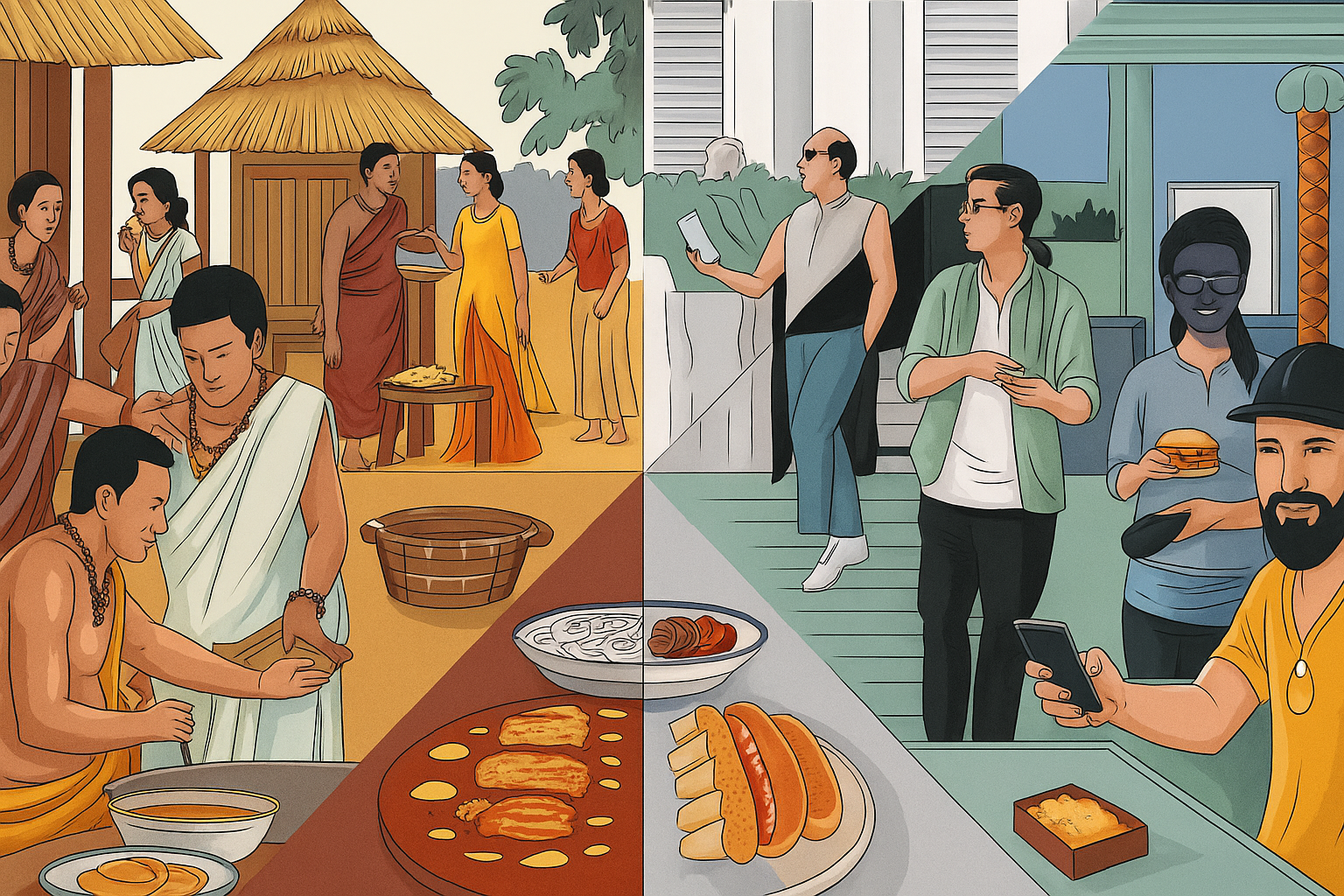
Fusion culture has evolved from being a mere trend to becoming a fundamental aspect of modern life. It permeates our interconnected world and is visible everywhere, from fashion runways and dining experiences to wellness practices and entertainment. This phenomenon is far more than the mixing of traditions; it’s the convergence of histories, value systems, and identities that perhaps reflects our global era more deeply than anything else. The blend of Desi—Indian—traditions with those of the West and now the East, particularly Korea and Japan, has been gaining momentum. As these cross-cultural exchanges deepen and become more sophisticated, they reveal symbolic meanings and have larger implications for global identity and cultural preservation.
A Global Runway of Cultural Threads
Indo-Western style is a graceful blend of Oriental and Occidental filigree that has evolved from colonial cross-pollination into an independent style. This style has advanced to create garments that merge traditional Indian weaves and embroidery with modern Western silhouettes, thanks to contemporary designers like Saqib. What started as a small movement is now showcased on red carpets worldwide through fusion ensembles. According to a article by times of India in next 2 years it is expected that by 2025, the Indian fashion market market is expected to grow at a compound annual growth rate (CAGR) of 11-12 percent to reach $115-125 billion by 2025 driven by global appreciation for these unique styles and the role of social media in spreading fashion trends. However, challenges lie in preserving traditional craftsmanship amid rapid mechanization and maintaining a balance between creativity and cultural authenticity.
A Global Feast of Flavors
Culinary fusion is transforming the way we dine. The combination of flavors and cooking techniques from different cultures results in dishes that epitomize creativity and innovation. Recent trends show that 68 percent of urban millennials have expressed significant interest in fusion foods, especially when dining out. Indian spices combined with global ingredients have led to the creation of dishes like Tandoori sushi and paneer quesadillas. Indian flavors have certainly made their mark on the international culinary scene, with Japan embracing curry pizza and the UK adopting tikka masala. Globalization has broadened culinary experiences, and fusion restaurants often serve as cultural ambassadors.
Lifestyle Fusion: Tradition meets Modernity
Lifestyle fusion extends far beyond food and fashion, encompassing a wide array of personal care and wellness practices.
According to an article in the New Indian Express it is expected that by 2026, the global market for fusion beauty products, which combine Korean skincare techniques with Ayurvedic ingredients, will reach $18.32billion. Brands like Forest Essentials embody this integration by offering products that merge ancient wisdom with modern formulations. Health-related customs have also gained popularity worldwide, and the numbers reflect this trend. The growing Desi fusion of Western and Eastern cultures involves significant implications for cultural identity and symbolism. For instance, in current Western fashion, it is typical to find designs that employ Indian motifs or incorporate Korean beauty regimes with Ayurvedic ingredients.
Fusion goes beyond mere trends, highlighting how changing narratives form a cultural reinvention of heritage for identity and preservation in an ever-changing world. Fusion culture can be seen as a metaphor for the resilience and adaptability of cultural practices. In a world where popular Western culture, like Hollywood, dominates global media markets, the phenomenon of fusion culture offers an alternative narrative. This means that non-Western cultures can drive global trends while keeping their traditions alive through ongoing transformation. This understanding of cultural identity demonstrates how traditions adapt and persist, especially when cultures like Korean and Japanese blend with Western or other foreign influences to create something new.
The rise of cultural blending raises important questions about identity and cultural authenticity. It enables individuals to embrace their heritage while remaining receptive to global influences. However, there is a fine line between appreciation and appropriation of cultures that requires careful navigation. We should approach the process of cultural fusion with respect to avoid losing the roots of these cultures. The evolution of Indo-Western fusions in food, fashion, and lifestyles clearly demonstrates how these ever-changing phenomena continue to engage in a dialogue between tradition and modernity. In every aspect of life, the union of opposites produces discerning and exciting forms. The future will likely be characterized by multicultural societies that enhance global culture through a deeper understanding of the creative expressions of people worldwide.
The fusion of cultures transcends specific sectors and fosters diverse and interconnected exchanges. This synthesis of history and modernity reflects the increasing interconnectivity in a world where cultural boundaries are fluid and ever-changing. It’s a dynamic, ongoing process that requires constant renegotiation among various cultures rather than being just another fashion fad. We can expect even more impressive blends of past and present, driven by technological advancements, though different reinterpretations may emerge elsewhere. This could range from AI-backed recipes and fusion cuisines prepared by robot chefs to cultural dances in virtual reality. These innovations represent an expanding human society that can take many forms. Fusion culture serves as a testament to the ingenuity, flexibility, and perseverance of humanity.