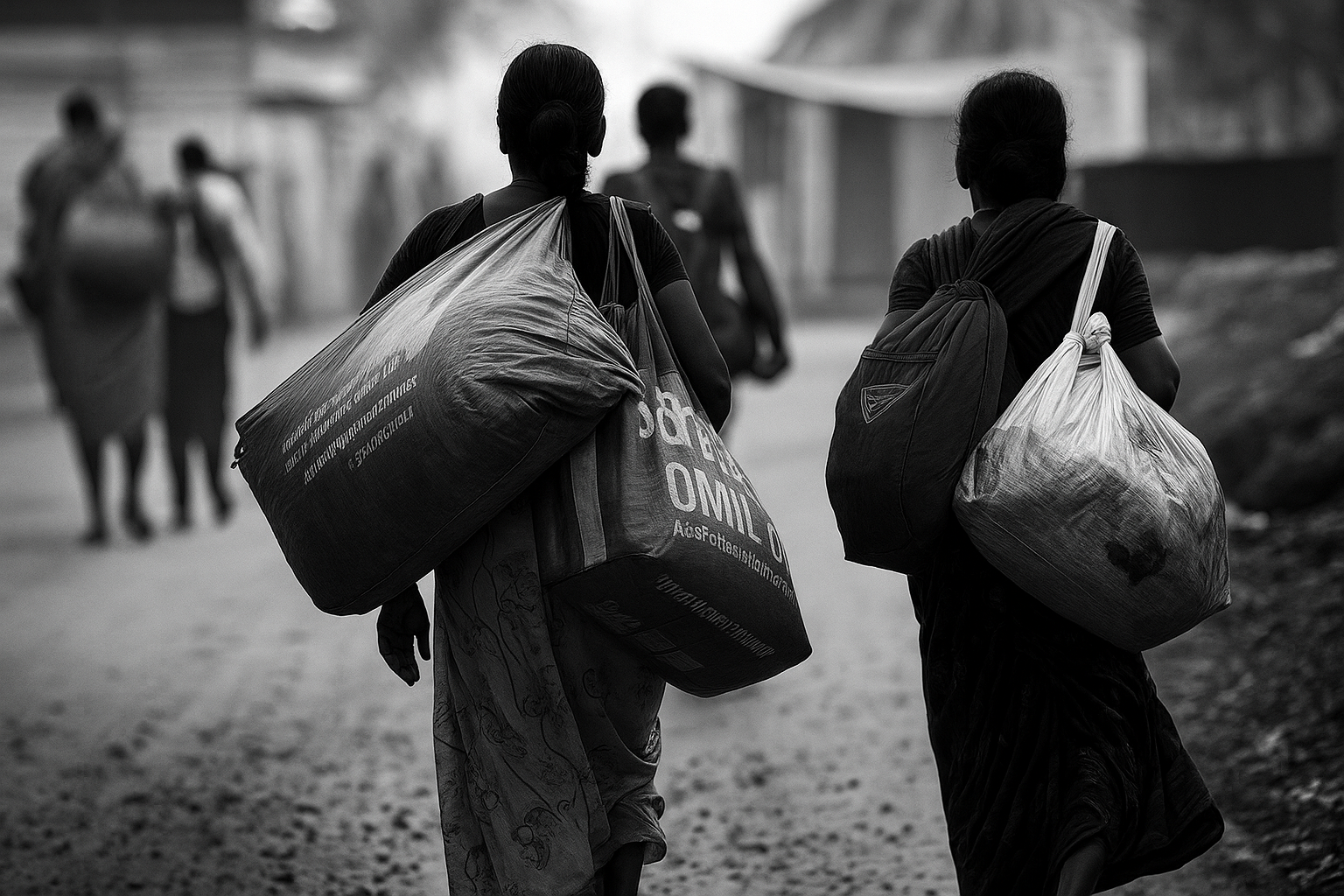
Why people move ? An exploration of the migration patterns towards the Southern States of India
In recent years, there has been a significant increase in North Indian workers migrating to South India. This trend raises the question: why are so many people from northern states moving to regions where they may be unfamiliar with the language, culture, or geography? The primary driver behind this migration appears to be economic. Many of these workers are struggling to find adequate employment in their home states. The wages for similar jobs in North India are often lower compared to those in the South, prompting workers to seek better opportunities in economically vibrant southern states.
The disparity in wages between local workers and North Indian migrants has led many companies to hire these workers at lower rates. The willingness of North Indian workers to accept lower wages can be attributed to the severe economic conditions in their home states. In northern states, inadequate employment opportunities, food insecurity, and insufficient access to education and healthcare have driven many to seek better living conditions elsewhere. Southern cities offer a more stable environment and better basic amenities, making them attractive destinations.
The economic divide between North and South India is stark. For instance, Tamil Nadu’s GDP for 2021-22 was $333 billion, while Karnataka’s was $316 billion. In contrast, Bihar’s GDP was only $105 billion, about a third of Karnataka’s. Other northern states like Assam, Chhattisgarh, and Jharkhand also lag significantly behind. This disparity is not merely due to geographical factors but is deeply rooted in systemic issues like poor education, inadequate food security, and limited healthcare facilities in the northern states, which have left large segments of the population in extreme poverty.
Poverty rates further illustrate this divide. According to NITI Aayog, Bihar has the highest poverty rate at 33.76 percent, followed by Jharkhand at 28.81 percent. In comparison, Kerala boasts the lowest poverty rate at just 0.55 percent, and Tamil Nadu is at 2.20 percent. The lack of employment opportunities and poor educational infrastructure contribute significantly to these poverty levels. As a result, migration patterns show a trend where southern states attract a significant influx of workers from the north. Data from the 2011 Census reveals that states like Tamil Nadu, Karnataka, and Maharashtra have experienced substantial in-migration, while states like Bihar, Uttar Pradesh, and other northern states have been major sources of out-migration. Between 2001 and 2011, Uttar Pradesh and Bihar together accounted for over 35 percent of India’s inter-state migrants, driven by the pursuit of better employment opportunities and living conditions in the more developed southern states.
Education also plays a crucial role in this migration trend. Literacy rates in southern states like Kerala and Tamil Nadu are significantly higher than those in many northern states. Kerala leads with a literacy rate of 96.2 percent, while Tamil Nadu follows at 80.33 percent. In contrast, some northern states like Bihar and Chhattisgarh have literacy rates around 70 percent, with Rajasthan at 69.7 percent. The quality of education further compounds this issue. Kerala tops the Educational Quality Index with a score of 82.2 percent, followed by Tamil Nadu at 73.4 percent. Northern states such as Arunachal Pradesh, Jharkhand, and Bihar lag far behind. This disparity in educational quality has led to a growing number of students from North India migrating to the South for higher education. States like Tamil Nadu, Karnataka, and Kerala, with their well-established educational institutions, have seen increased enrollment from northern students. Tamil Nadu, for example, boasts 18 institutions in the top 100 NIRF rankings, including IIT Madras. In contrast, states like Bihar and Jharkhand have only one or two institutions in these rankings.
The migration trend also extends to employment opportunities, particularly in the startup sector. Southern states such as Tamil Nadu, Karnataka, and Kerala rank highly in startup rankings, reflecting their robust economic environments and job creation potential. Northern states like West Bengal and Jharkhand are not even ranked, while Bihar and Nagaland are categorized as aspiring leaders. The presence of a thriving startup ecosystem in the South correlates with increased employment opportunities and overall economic growth.
The disparity in economic performance and fund allocation between northern and southern states was a focal point in the 2024 Indian budget debate. The central government allocated approximately ₹1.5 lakh crore to Uttar Pradesh, while Tamil Nadu received around ₹70,000 crore, despite Tamil Nadu’s higher GDP and economic contributions. This allocation discrepancy has sparked discussions about the equity and rationale behind such financial decisions. Critics argue that the substantial financial support for northern states like Bihar, Uttar Pradesh, Assam, and Madhya Pradesh seems disproportionate compared to the needs of economically stronger southern states.
The debate over fund allocation also ties into broader discussions about development models. The “Gujarat Model,” promoted during the 2014 Lok Sabha elections, showcased Gujarat’s rapid industrialization and infrastructure improvements as a national development template. However, applying the same model to states with different industrial bases or administrative challenges may not yield similar results. Similarly, the “Uttar Pradesh Model,” with its focus on law and order and infrastructure development, might not be directly translatable to other states with distinct issues.
Efforts to replicate these models in other states have met with mixed results. For example, attempts to introduce certain industrial policies from Gujarat into Tamil Nadu faced resistance due to differing labor laws and business practices. The 2024 budget debate underscores the need for tailored development strategies that consider each state’s unique conditions rather than applying a uniform model across the country. Equitable fund distribution and context-specific policies are crucial for addressing the diverse needs of India’s states and fostering balanced national development.