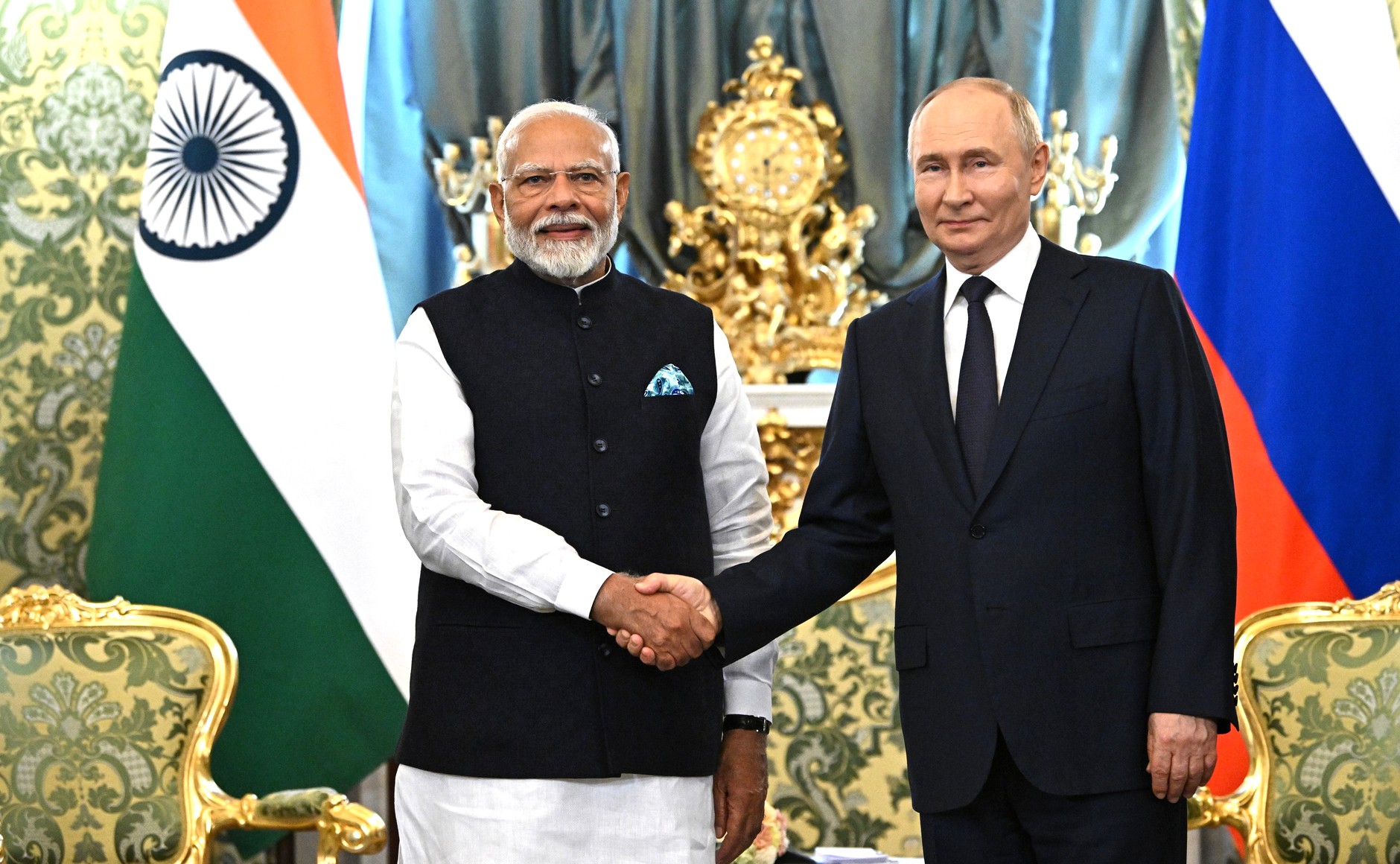
India’s Balancing Act: Navigating the India-Russia Partnership Amidst the Ukraine Crisis
The India-Russia relationship is surely one rooted in the annals of time and imbued with mutual trust. From the Cold War era up to the present date, military cooperation, economic engagement, and political camaraderie have hallmarked the ties between the two countries. The relationship with Russia has been cardinal in molding India’s foreign policy, with Moscow emerging as a substantial friend during times of crises. However, the Ukraine crisis brought newer challenges before this historic partnership. India is forging ahead with its diplomatic acumen in a world where the landscape of active politics is undergoing a realignment.
Indeed, India has always been noted for its remarkable neutrality on the Ukraine crisis, something clearly evidenced by its various UN vote abstentions.
Since the beginning of hostilities in February 2022, India has abstained on many UN resolutions critical of Russia, both in the General Assembly and the Security Council. This position is a consequence of India’s adherence to a strategic autonomy and non-alignment policy, wherein the country tries to balance its approach of not aligning with any bloc in the great power contests while protecting its national interests. Economically, the Ukraine crisis severely affected India’s trade relations with Russia. The crisis did not deter India, however, from continuing to trade with Russia, particularly in the energy sector, against the sanctions imposed upon Moscow by Western nations. As soon as the war began, India’s imports of Russian crude oil started increasing significantly. Estimates by consultancy Kpler suggest imports of 1.2 million barrels per day from Russia will be seen in 2023, up from 1.17 million barrels seen in 2022. This is a significant turn of events, as before the war, Russia was a minor supplier of oil to India. India’s stand to continue trade with Russia is led by its need for energy security and an inexorable pursuit of cheap oil. At the same time, India has voiced deep concern over the humanitarian crisis in Ukraine, urging dialogue and diplomacy that would clear the way to a resolution of the conflict.
India has not resorted to outright condemnation of Moscow, skillfully treading the tightrope between its commitment to international norms and their steadfast commitment to the strategic partnership with Moscow.
The Ukraine crisis brought new dimensions in the relationship between India and Russia amidst the shifting geopolitical focus of the latter. While making this movement further away from the West, Russia has continued to enhance its alliance with China, the most supreme ranking ally in the region so to say. This is a cause for uneasiness on the part of India that too has security concerns with China, especially over the disputed borders of the Himalayas. India, historically, has benefited from Moscow’s neutrality in Sino-Indian disputes that Russia tried to maintain. But this increasing camaraderie between Moscow and Beijing creates a potential taint on India’s strategic interests. Despite these strains, military cooperation between India and Russia remains strong.
India remains dependent on Russian defense equipment, with over 60 percent of the country’s military hardware procured from Russia. Several key defense projects reveal clear evidence of the importance attached to defense cooperation: the joint manufacturing of BrahMos missiles and the leasing of Russian submarines. It is against this background that India received its first deliveries of the S-400 missile system in the face of opposition from the United States, whose CAATSA posed the threat of sanctions against nations engaging in transactions with Russian defense firms. Economically, while the Western sanctions have affected certain aspects of trade, there are reports that India and Russia have tried to find alternative mechanisms of payment, bypassing both the dollar and the euro by settling trade in local currencies. Because of this, bilateral trade between the two countries has increased, especially in the energy sector. This led to an unprecedented $31.04 billion bilateral trade between India and Russia in 2022, fundamentally driven by the increase in India’s imports of oil, coal, and fertilizers from Russia. India’s neutrality in the crisis in Ukraine received a decidedly mixed response from across the world. While a string of countries expressed disappointment at India’s reluctance to adopt a stronger stance against Russia, they were also acknowledging the strategic importance of India to contain China’s influence in the Indo-Pacific region. Meanwhile, the relationship between India and the West-then particularly the United States-continued unabated on an upward trajectory. Examples of this budding growth in defense cooperation are represented by the signing of key agreements, such as the COMCASA-Communications Compatibility and Security Agreement-and the BECA-Basic Exchange and Cooperation Agreement. Yet, this balancing act extends to multilateral organizations, including BRICS and the Shanghai Cooperation Organization, of which India and Russia are significant members.
The Ukraine crisis has put unity to the test at such organizations, as India tries to keep cooperation free of tensions due to differences in positions on the conflict.
Non-alignment remains the pivot on which India’s diplomacy stands, permitting Indian diplomats to straddle both Moscow and Washington.This equilibrium is distinctly evident in the defense sector.
As much as India stretches its military supply routes to the United States and the European Union, the reliance of India on Russian hardware remains very high. Energy security is another important consideration, and ever since the current dispensation in India started work on diversifying its sources of energy, its dependence upon Russian oil has increased. One of the biggest challenges that faces India is how it works its way through the strengthening relationship between Russia and China.
How well India will manage this balance, without tilting into a strategic one, remains to be seen as Moscow becomes more dependent on Beijing, driven by its isolation from the West. India’s neutrality over Ukraine brought a number of diplomatic challenges, especially with the West, but it signifies at the same time the strategic autonomy of India. When there is a suggestion that India can act as a mediator in this crisis between Russia and the West, a possible chance comes out. In view of a multipolar world, ahead of the immediate future, India-Russia relations will evolve on a trajectory configured by India’s need to balance the competing interests which would press upon it with a view to maintaining strategic autonomy through shifting global power dynamics. No doubt, the Ukraine crisis has redefined India-Russia relations by placing their
partnership in a cauldron of immense pressure. In fact, India’s future foreign policy must be carefully tailored to the evolving world order, full of opportunities and challenges, as it tries to walk the delicate tightrope in geopolitics.
Precisely how much India can balance this precarious balance while securing its key national interests will, over time, shape the course of the future of its relationship with Russia and the rest of the world.