Beyond Stats: The Subjectivity of Ballon d’Or Voting
The Ballon d’Or, initially meant to be the golden standard of individual achievement for football players, originated in 1956 when France Football created the Ballon d’Or to reward the best European player in a calendar year. Since then, it has evolved into the most prestigious individual award the game has to offer, recognizing talents from other parts of the world, becoming. However, in recent years, the award has been quite politically charged leading people to question its fairness and its voting system as well as even questioning whether it rewards the best player of the year or is more of a story surrounding the player. Its voting system, commonly conducted by journalists around the globe, has also been subject to criticism due to bias, media narratives, and national loyalties.
One glaring example was in 2013 when Franck Ribéry, despite having one of the best seasons of his career, had not been awarded a crown. That year, Ribéry led Bayern Munich to their historic Treble, winning the Bundesliga, the DFB-Pokal, and the Champions League, for which he scored 23 goals and provided 21 assists in an absolutely phenomenal season. Yet this year, for all his greatness, the Ballon d’Or was awarded to Cristiano Ronaldo, who, with Real Madrid, did not win any title. It highlighted how sometimes the award has more to do with a larger narrative or marketability of a player than his playing.
In 2020, the Ballon d’Or was controversially not awarded due to the COVID-19 pandemic, despite Robert Lewandowski’s career-defining season. The Polish striker scored 55 goals and provided 10 assists in 47 appearances, leading Bayern Munich to a historic treble that included the Bundesliga, DFB-Pokal, and Champions League titles. Lewandowski’s unmatched brilliance made him the clear favorite for the award that year. However, its cancellation left a void in football history and raised questions about the Ballon d’Or’s ability to adapt to extraordinary circumstances, leaving Lewandowski’s legacy without the recognition it deserved.
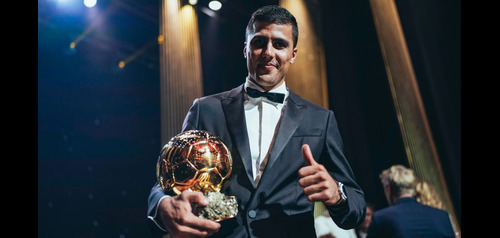
In 2024, controversy arose over the exclusion of Vinícius Júnior from the Ballon d’Or podium despite his sensational season with Real Madrid. The 23-year-old Brazilian winger scored 23 goals and provided 18 assists across all competitions, delivering match-winning performances, especially in the Champions League. However, the award went to Rodri of Manchester City, whose instrumental role in their historic Premier League and Champions League triumphs earned him recognition. Rodri’s season featured 10 goals and 4 assists in 58 appearances, but his dominance in midfield, dictating play and breaking opposition attacks, was pivotal to City’s success. While Rodri’s influence was undeniable, many questioned whether Vinícius, with his more direct output and decisive contributions, deserved the honor instead. These trends therefore throw light on a larger issue concerning the basis applied for selections by the Ballon d’Or awards.
For long, the award has been considered as favoring champions of the act of scoring goals and giving assists as it tends to miss players that make crucial contributions in less glamorous roles. Players like Virgil van Dijk, N’Golo Kanté, and Rodri are most often overlooked even with significant contributions to their teams winning because of being ignored in these schemes. This narrow focus on statistics tends to elevate attackers, while the substantial contribution of midfielders and defenders who can completely control a game, break up opposition attacks, and offer crucial assists end up ignored or undervalued.
For the Ballon d’Or to truly reflect the essence of football, it must look beyond the numbers and headlines, and embrace the true poetry of the game. Football is more than just goals and assists; it’s the quiet brilliance of a defender who reads the game like a novel, the tireless work of a midfielder who orchestrates play with the subtlety of a maestro. It’s the leadership that rises in a captain’s eyes when the team is on the brink and the moments of magic that cannot be measured by statistics alone. To honor greatness, the Ballon d’Or must recognize the many threads weaving the fabric of a season together because the best players are not always those who shine brightest in the spotlight, but those who leave their mark in those unspoken moments, in the rhythm of the game itself. Until the award truly reflects this harmony, it will continue to dance to a tune that only some can hear, leaving other symphonies unheard. Football deserves an accolade that celebrates all the facets of its beauty not just the most obvious, but the most profound.