A Day in the Life: Civilians Living Through the Russia-Ukraine Conflict
The war in Ukraine started on February 24, 2022. The war has lasted for over 1,000 days and has thrown the country into one of the most destructive wars in modern history. Both sides have suffered catastrophic losses, and the Ukrainian side has seen all aspects of life shattered to pieces. All of its cities laid waste, millions died, and hundreds of thousands of families separated. The economic, human, and societal toll is overwhelming, with no indication that this struggle is near a conclusion. The most concerning development occurred when Russian President Vladimir Putin altered the concept of the nuclear arsenal. A non-nuclear state that receives support from a nuclear-armed ally could consider any such strike as a collaborative attack, thereby justifying the use of nuclear weapons. The humanitarian crisis continues to worsen. This has brought world-wide fears of the conflict going on and turning into a global nuclear disaster, with some analysts believing this could be World War III. This nuclear juggling has caused tremors in the world, spiking concerns about the frailer state of international security at present.
The extent of devastation in Ukraine is apparent.Continuous shelling and missile attacks completely destroy cities like Mariupol, Bakhmut, and Kharkiv. Targets included homes, hospitals, schools, and cultural monuments, rendering entire neighbourhoods uninhabitable. Extensive damages or destruction to power plants, water systems, and transportation networks have exceeded hundreds of billions of dollars in economic costs. The humanitarian crisis intensified as millions of Ukrainians lost access to basic necessities.The humanitarian crisis continues to worsen. The human cost is even more appalling. More than 9 million Ukrainians have fled the country, seeking refuge in neighbouring countries, while millions remain internally displaced. Mass killings of thousands of citizens, including women and children, have occurred, and the number of civilian casualties continues to rise. Cases and accounts of war crimes, such as executions, tortures, and rapes in the occupied region, demonstrate the ruthless nature of war.
Both sides are witnessing escalating military operations. Both sides have suffered catastrophic losses, and the Ukrainian side has seen all aspects of life shattered to pieces. Russia has allies, including China and South Korea, from which it can expect alliance and support. Up to date, it employed sophisticated equipment. The conflict exposed the Oreshnik missile, a nuclear-capable weapon. In contrast, Ukrainian forces are also supported by NATO and have upgraded military hardware with the inclusion of ballistic missiles and drones, which have successfully facilitated precision strikes on key Russian positions. The U.S., after prolonged debate, transferred long-range ATACMS missiles to Ukraine, a decision that has significantly impacted the war’s dynamics. However, the death toll among soldiers is staggering. Each Ukrainian and Russian force has suffered hundreds of thousands of casualties; reports indicate brutal conditions on the front and a sharp decline in soldier morale. There is yet another unreported crisis born of this war—the environmental damage it has unleashed. Explosions, fires, and military action have spread the poisoning far and wide over acres of land, poisoned the waters, destroyed arable land, and thus endangered Ukraine’s future in agriculture and its environment.
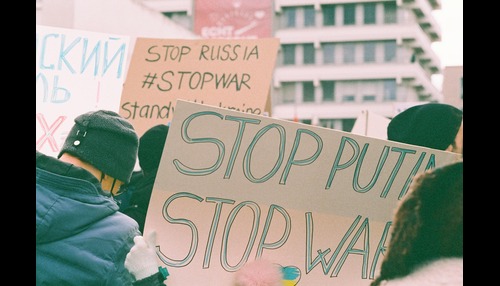
Both countries have experienced significant strain individually. International sanctions have strangled Russia’s economy by ruining its industries, devaluing its currency, and isolating the country from global markets. The war pushed Russian society, whose financial plight is pushing its people to their limits, into a state of extreme repression, which saw thousands arrested for anti-war protests. The nation in Ukraine lives in a state of constant emergency—the citizens facing power cuts, food shortages, and the same psychological shock of living under the shadow of war. Geopolitically, the consequence is equally monumental. Ukraine’s determination to join NATO remains a key point of contention, fueling Russia’s aggression. Meanwhile, international efforts to broker peace have been largely ineffective. The lack of substantive negotiations reflects the broader geopolitical struggle, with nations prioritizing strategic alliances over humanitarian solutions. Global leaders’ silence on meaningful resolutions serves as a stark reminder of how political agendas overshadow the lives of millions.
However, as winter approaches, the focus of economic warfare is shifting to Ukraine’s energy infrastructure and supply chains. Expected to erode resistance in Ukraine while intensifying civilian suffering during the destructive winter, Russia seems now to be making most efforts toward that bitter objective. An edifice of humanitarian crisis continues to develop; international aid cannot keep pace with rising needs among displaced families.
The war in Ukraine is not just a conflict between two nations; it is a battle that has reshaped global power dynamics and exposed the vulnerabilities of international diplomacy. The immense loss of property, the tragic loss of life, and the irreparable societal damage underscore the devastating consequences of unchecked aggression. As the war grinds on, the world watches anxiously, hoping for peace while bracing for the possibility of an even darker chapter in history.