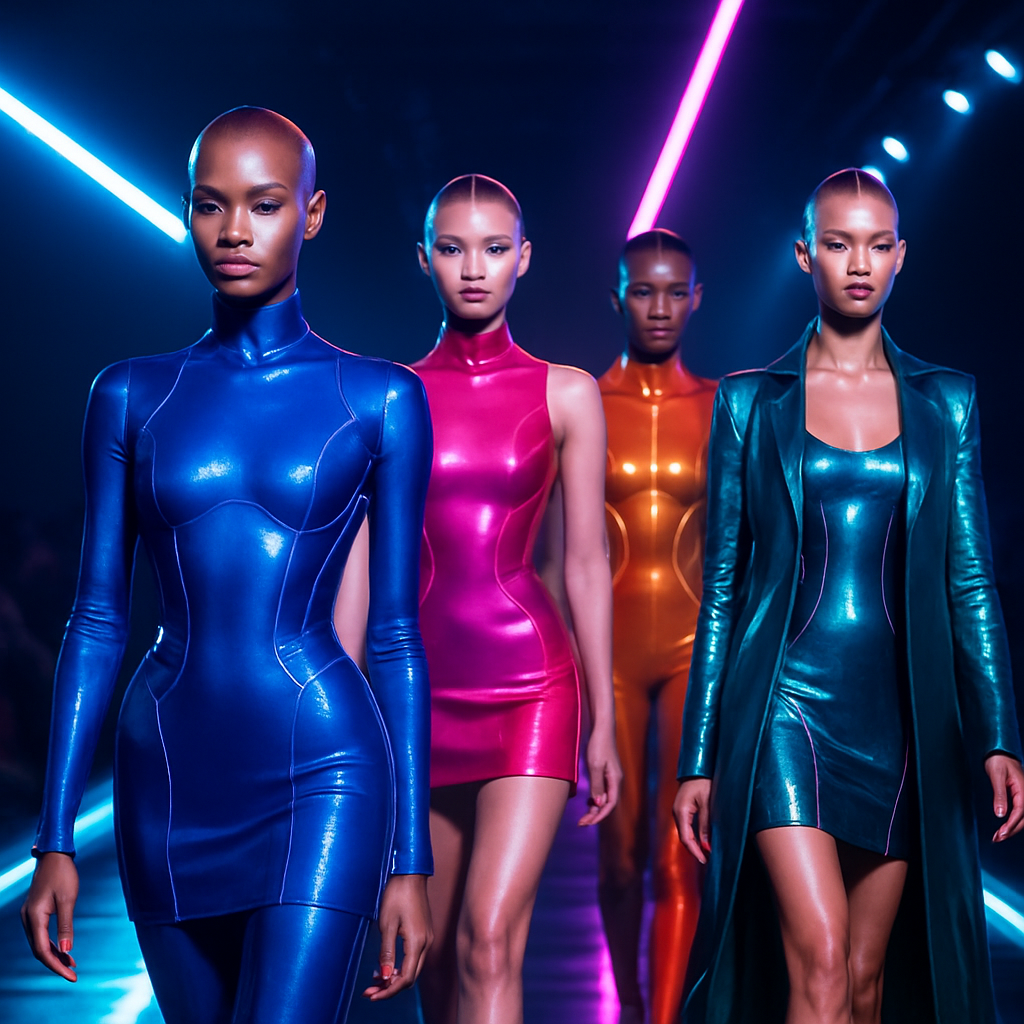
She’s beautiful. She’s flawless. She doesn’t need sleep, equal pay, or fair rights because she does not exist. Fashion’s new favorite muse is the perfect woman: no blemishes, no demands, and no heartbeat.
The recent uproar over Guess’s new AI-generated model, featured in the pages of Vogue, has caused quite the uproar and has reignited a question the industry keeps trying to bury: what happens when beauty becomes artificial, and authenticity becomes unnecessary?
Let’s not beat around the bush. For years, fashion has dictated that women shrink to fit into its clothes, its campaigns, and its narrow ideals. Their bodies, their labor, and their voices have all been controlled. But with artificial intelligence, even that effort is no longer required. Why deal with a living, breathing human being when you can generate a perfect model in two seconds?
She’s never “difficult.” She never asks for better representation. She doesn’t advocate for dignity, for safety, or for wages. She exists to look good and stay quiet. The perfect fix to the industry’s long-standing problem: real women who dare to push back.
Only a few years ago, we saw the industry begin to slowly embrace inclusion. Runways started to feature plus-sized, trans, disabled, and older models, a move that felt long overdue. But under the rise of AI, that progress is fading. Diversity has become a checkbox that can now be replicated. Instead of hiring actual Black, queer, or plus-sized models, brands can now generate a single “racially blended” bot and call it inclusion.
This is not innovation, it’s erasure. These models are created based on biased data, filtered through algorithms that favor beauty standards and symmetrical faces. What we’re really witnessing is the automation of exclusion coded by convenience, driven by capitalism.
And the danger doesn’t stop at models. Stylists, makeup artists, photographers, editors, the whole of creative workforce behind the fashion machine is at risk of being pushed out in favor of AI tools that can produce a full editorial spread in minutes. This isn’t just about replacing faces. It’s about replacing people.
Fashion has always sold fantasy. But now, it’s selling a future where the human element: the flaws, the effort, the lived experience is erased entirely. The message is clear: women are easier to work with when they aren’t women at all.