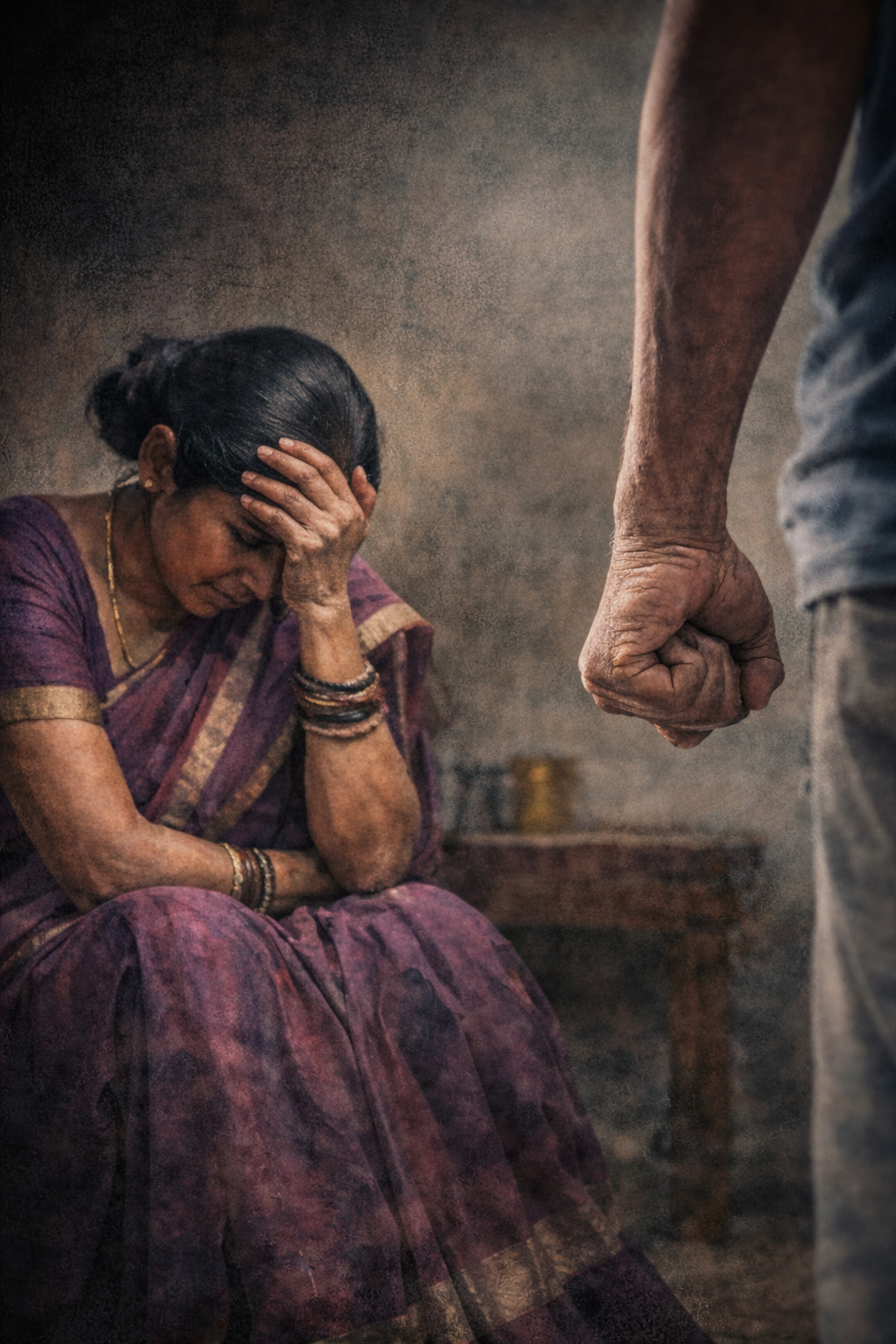
Domestic violence in Tamil Nadu is more than a public health statistic; it reflects the everyday struggles of women whose suffering often remains hidden within the walls of their homes. An analysis of data from the National Family Health Survey (NFHS-4, 2015–16 and NFHS-5, 2019–21) shows that despite years of development programs, policy reforms, and awareness campaigns, violence against women has not significantly declined.
NFHS-4 reported that about 39 percent of women aged 15–49 had experienced physical violence, while 3 percent had experienced sexual violence. NFHS-5 reveals a slight increase in physical violence to 41 percent among women aged 18–49, with sexual violence remaining unchanged at 3 percent. Overall, 42 percent of women in Tamil Nadu reported experiencing physical or sexual violence in NFHS-5, compared to around 40 percent in NFHS-4. These numbers suggest that progress has been limited, and for many women, safety within the home remains uncertain.
Spousal violence continues to be the most common form of abuse. Nearly 38 percent of ever-married women reported experiencing violence from their husbands in NFHS-4, and this increased to 40 percent in NFHS-5 for physical or sexual spousal violence. Acts such as slapping, pushing, kicking, and emotional humiliation are not isolated incidents but recurring realities for many women. The fact that husbands are most often identified as the perpetrators highlights enduring gender power imbalances within marriage.
Violence during pregnancy remains another deeply concerning issue. Approximately 3 percent of women in both survey rounds reported being physically abused while pregnant. A period that should be marked by care and protection instead becomes a time of vulnerability for some. Women with lower levels of education, those who are widowed, divorced, or separated, and women with multiple children face greater risks, showing how social and economic disadvantages intensify exposure to abuse.
Equally troubling is the silence that surrounds domestic violence. NFHS-5 shows that only 12 percent of women who experienced violence sought help, while 81 percent neither sought assistance nor disclosed their experiences. Very few approached law enforcement authorities. These figures reflect fear, stigma, social pressure, and the normalization of abuse within families and communities. When violence is seen as a private matter, speaking out becomes incredibly difficult.
Gender attitudes further explain why domestic violence persists. A significant 78 percent of women and 56 percent of men believe that wife-beating is justified under certain circumstances. Such acceptance reveals how deeply patriarchal norms continue to shape beliefs about authority, obedience, and marital roles. When violence is socially justified, breaking the cycle becomes even more challenging.
The comparison between NFHS-4 and NFHS-5 presents a sobering picture. Although Tamil Nadu has made notable strides in education, economic development, and access to technology, these advances have not translated into meaningful reductions in domestic violence. Structural inequality, controlling behaviors, alcohol abuse, and entrenched social norms continue to shape women’s lived experiences. Addressing domestic violence therefore requires more than legal measures; it demands sustained efforts to change attitudes, strengthen support systems, and ensure that homes become spaces of safety and dignity for women.
