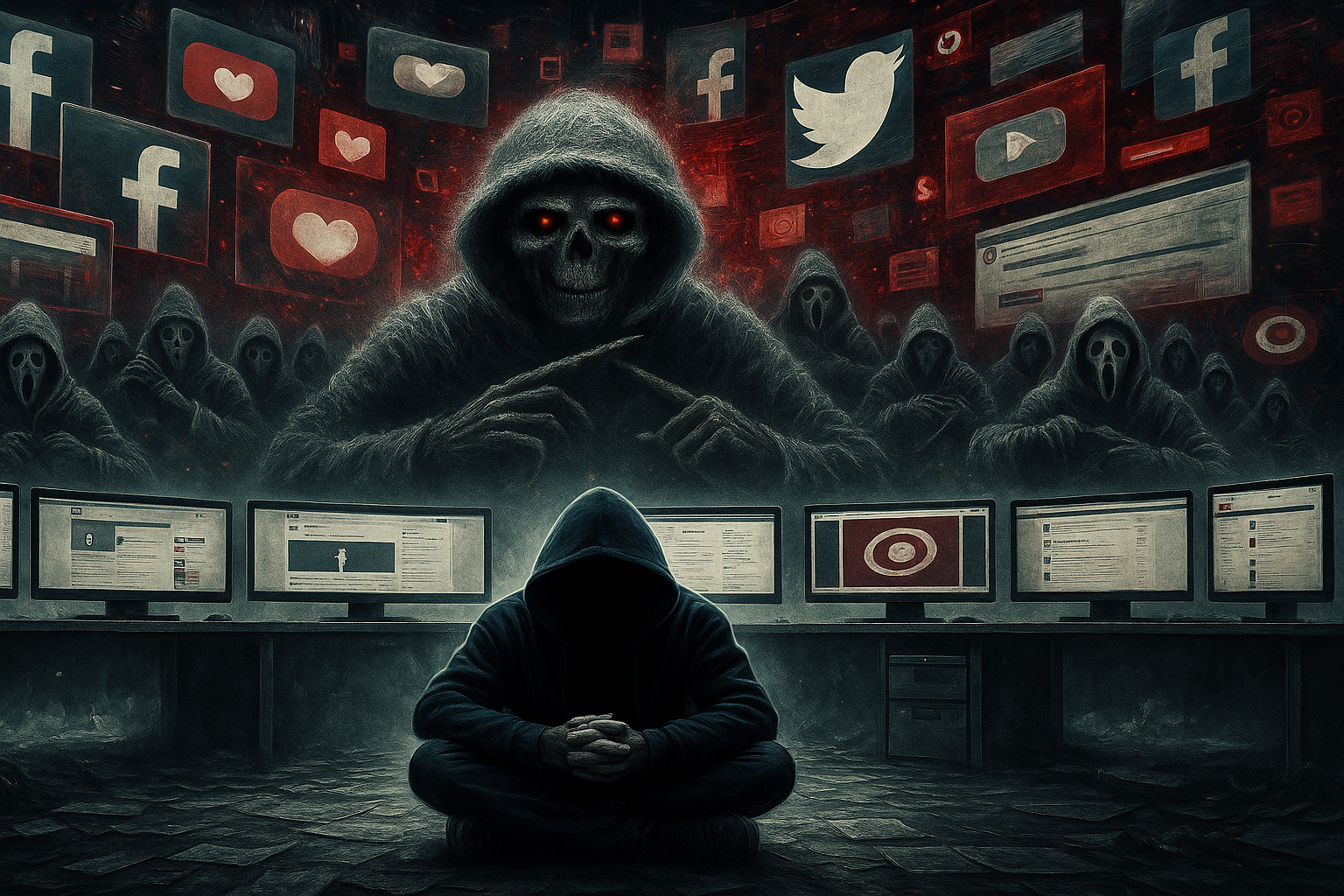
Echoes of extremism: How social media ignites lone-wolf terrorism
Lone-wolf terrorism is the latest in a trend of individuals carrying out violent attacks without orders from some larger group. It is a type that is clearly more difficult to prepare for, prevent, or predict because of how it leaves the predictability of an organized terror cell far behind. With the rise of the internet and, more precisely, social media, has created a fertile ground for radicalization because one can engage in extremist ideologies without leaving the home. As of late, many attacks are correlated with online radicalization through exposure to extremist content on social media platforms. For example, the Christchurch shooting in 2019 and the attack on the El Paso Walmart later that year were both carried out by those involved due to the influence of online communities and manifestos that they found and were influenced by on the internet.
We can see that these incidents exemplify a troubling trend: the growing role of digital platforms in facilitating the spread of extremist ideologies and inspiring violence. Instead of being instruments of bringing people together, social media platforms inadvertently become places where hate speech and extremist content thrive. Platforms like Facebook, Twitter, and YouTube provide unprecedented access to a wide array of content, much of which involves violence and other forms of radical ideologies. Extremist groups have started efficiently using these platforms to promulgate their messages, wherein the vulnerabilities of individuals, who have perhaps been made to feel isolated or disillusioned with society, are exploited for a greater agenda.
Algorithms play a central role among the primary methods by which one is radicalized on social media. Those algorithms built to focus users on topics they have engaged in before are set up to amplify how much that individual will view content around that particular subject — a technology otherwise known as the “echo chamber.” Inside an echo chamber, individuals continually hear the same extreme rhetoric, which not only solidifies those beliefs and normalizes radical ideologies but also appeals to their morality and reinforces the idea that these ideologies are virtuous ones.
The ability of these platforms to operate all over the world has made them very effective in disseminating online hateful content. Social media also allows users anonymity, which often emboldens people to post hateful viewpoints without the fear of repercussions in the real world. A study by the Anti-Defamation League found that 53 percent of online hate and harassment victims encountered their attackers on social media platforms and according to an Institute for Strategic Dialogue (ISD) report in 2020, individuals within extremist online communities are exposed to hate speech five times more often than the average user.
Some very recent lone-wolf attacks showcase the malice that lurks in the dark corners of the online world. For instance, the 2019 New Zealand Christchurch mosque shooting still lives vividly in memories since the perpetrator live-streamed the massacre on Facebook. The attacker had been indoctrinated through online communities, sharing a manifesto that had deep roots in extremist views sourced from platforms like 4chan and 8chan. In the same light, the El Paso Walmart shooter cited the role of online platforms as the source of his radicalization and motivation for the attack.
What is perhaps more worrying is these incidents are not limited to Western countries. In 2016, Bangladesh witnessed a lone wolf inspired by ISIS, radicalized by social media, who carried out a mass murder assault on a Dhaka café, killing 22 people. Both reflect the global reach of online extremism and the way it can inspire violence across such different cultural and geographic boundaries.
Around the world, governments are trying to figure out how they can work to counter online radicalization without infringing on free speech. Many countries have enacted legislation that regulates content online. For example, Germany has enacted its NetzDG law, which requires social media companies to remove illegal content including hate speech within a stunning 24 hours or pay stiff penalties. Another ambitious European Union initiative, the Digital Services Act, promises to strengthen controls over how platforms handle illegal content. However, online speech regulation does have a number of difficulties. For instance, extremists become increasingly sophisticated in using encrypted messaging apps such as Telegram to hide themselves. This decentralized nature of lone wolves makes preventing them even tougher because most attackers work alone and leave very few traces for the authorities to follow which makes them even tougher to catch.
As the crisis of extremism is increasingly linked with social media companies’ role in it, such companies as Facebook, Twitter, and YouTube are gradually implementing policies to fight online extremism. For example, Facebook introduced a “Dangerous Individuals and Organizations” policy, banning content promoting terrorism, YouTube following its footsteps has begun to remove videos with hate speech and has further increased its efforts to this end.
Despite these efforts, critics argue that tech companies are not doing enough. According to a 2021 report by the Center for Countering Digital Hate, platforms often fail to enforce their own policies consistently. Many extremist accounts remain active, and harmful content often circulates before being taken down. Balancing the removal of extremist content with preserving free speech is a difficult task, especially when platforms are accused of censorship.
The emergence of lone-wolf terrorism in the digital age highlights the challenges of dealing with radicalization prevention in a hyperconnected world. While social media has created networks to hook people up, it also inadvertently widened the mode of information where extremist ideation spreads and engenders actions that breed violence.
Clearly, governments and tech companies must begin to work on this issue through a multi-faceted approach: better regulation, detection tools, and public and private sector cooperation. In the fight against online extremism, the stakes are too high, and finding a balance of the thin line between safety and freedom will allow no such attack to occur again in the near future and may save the lives and minds of innocent bystanders.