Fashion Industry Navigates Israel’s Actions in Gaza
The Israeli-Palestinian conflict began in the early 20th century with nationalist movements between Jews and Arabs. Tensions rose after the establishment of Israel in 1948, which led to the displacement of hundreds of thousands of Palestinians, the Nakba (“Great Massacre”), and subsequent wars and territorial disputes, especially in the West Bank and Gaza Strip… Fundamental issues such as the status of Jerusalem and a Palestinian state remain at the heart of the ongoing conflict.
Due to the involvement of many of its constituents, luxury companies have been linked to disputes such as those between Israel and Palestine. Many of these brands operate in conflict affected or local areas where they operate and contribute to the local economy. The strong bias of affluent customers can have a significant impact on marketing strategy and brand loyalty. Additionally, to avoid geopolitics, some luxury brands may openly support certain political ideologies or align themselves with certain governments, causing criticism and criticism in the process. They have the right to influence public opinion. Because of these complications, there is a complex relationship between luxury brands and geopolitical issues that affect how customers perceive their companies and their reputations.
The Israel-Palestine conflict is marked by ongoing tensions and humanitarian problems, mainly in Gaza. Luxury brands navigate this panorama carefully, as aid for Israel can resonate with positive customer businesses however may also entice backlash. Many brands face strain to demonstrate social obligation, due to a sensitive stability in their public statements and moves, which appreciably affect patron perceptions. Luxury brands like Balenciaga, Gucci, Valentino, Fendi, Dior, Chanel, Prada, and so on are in support of Israel.
What is BDS?
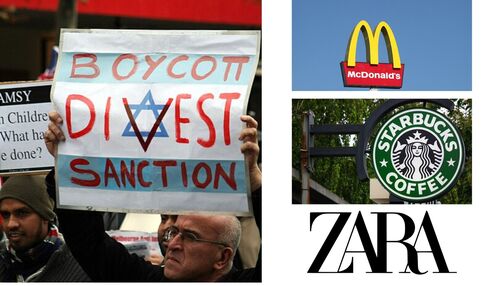
Boycott, Divestment and Sanctions (BDS) is a nonviolent Palestinian-led movement promoting boycotts, divestments, and economic sanctions against Israel. The objective of BDS is to pressure Israel to meet what the BDS movement describes as Israel’s obligations under international law, defined as withdrawal from the occupied territories, removal of the separation barrier in the West Bank, full equality for Arab-Palestinian citizens of Israel, and “respecting, protecting, and promoting the rights of Palestinian refugees to return to their homes and properties”. The movement is organized and coordinated by the Palestinian BDS National Committee.
How have sales of high-end brands associated with Israel been influenced by boycotts?
High-end brands associated with Israel have suffered from boycotts in the wake of political activism against the Israeli-Palestinian conflict. In countries that strongly support the Palestinian side, some consumers boycott these brands, leading to reduced sales. How far such boycotts succeed often depends on people’s “care about” for ethical consumption.
How brands respond to these boycotts also matters. Some companies try to polish things by either explaining their stance or touting their philanthropy. Others find new markets to preserve sales. Sometimes the effects can be short-term, but often they hold longer if the boycott picks up steam. This also differs by region. For high protest areas, the impact might be more vivid, while brands do well in areas wherein political concerns are not quite paramount. By and large, boycotts have complex effects on these brands, driven by consumer attitudes and the political climate. When it comes to the effectiveness of boycotts, multiple factors come into play, including consumer engagement with the underlying issues. Social media can amplify the voices of those advocating for ethical consumption, leading to sustained pressure on brands. However, boycotts may be in markets where political affiliations are less pronounced. Brands that are in dialogue about their values or demonstrate a commitment to social causes can mitigate the negative impact of boycotts, but the long term effects on their reputation can vary widely. Ultimately, the interplay between consumer sentiment, regional political dynamics, and brand responses shapes the landscape of ethical consumption and its impact on high-end in Israel.
Fashion Industry’s approach to the Israel-Gaza conflict
Dec 2023, the fast-fashion luxury brand Zara was under fire for the campaign showcasing their new jacket line. In their ad campaign, the mannequins were missing limbs and were wrapped in white shrouds that resembled Israel’s attack on Palestinians where thousands were killed and thousands were injured. Zara came out with a statement saying that the shoot for the ad campaign happened in September before the war took place and the photographs were inspired by the Men’s tailoring from past centuries.
In Mar 2024, people believed Louis Vuitton was taking sides after a t-shirt with the LV logo in Palestine colors had hit the shelves. The shirts are part of Louis Vuitton’s womenswear spring/summer 2024 line, but the parent company of Louis Vuitton, Louis Vuitton-Moët-Hennessy which is also the parent company of luxury Brands like Dior, Givenchy, Marc Jacobs, TiffanyandCo, Bulgari, etc CEO Bernard Arnault has invested in Israeli cybersecurity firm Wiz this supporting Israel.
Capri Holdings, the parent company of Micheal Kors, Jimmy Choo, Versace etc has made impactful contributions, including donations to The Legal Defense Fund in recognition of Juneteenth and the International Committee of the Red Cross to aid those affected by the conflict in Israel and Gaza. Donatella Versace commented on the supermodel and the descendent of Palestine Bella Hadid’s Instagram post of ‘Free Palestine’ but the comment was later deleted.
In Malaysia and Indonesia, the anti-Israel boycotts have chosen local alternatives for the French cosmetics L’Oreal and The Body Shop.
The main reason the boycott does not affect luxury brands but rather affects Fast food chains and beverage retails like Mcdonald’s, Burger Kings, and Starbucks is due to a lot of other brands being affordable and values aligning with the public.