Is Indian Democracy Evolving into a Modern Monarchy?
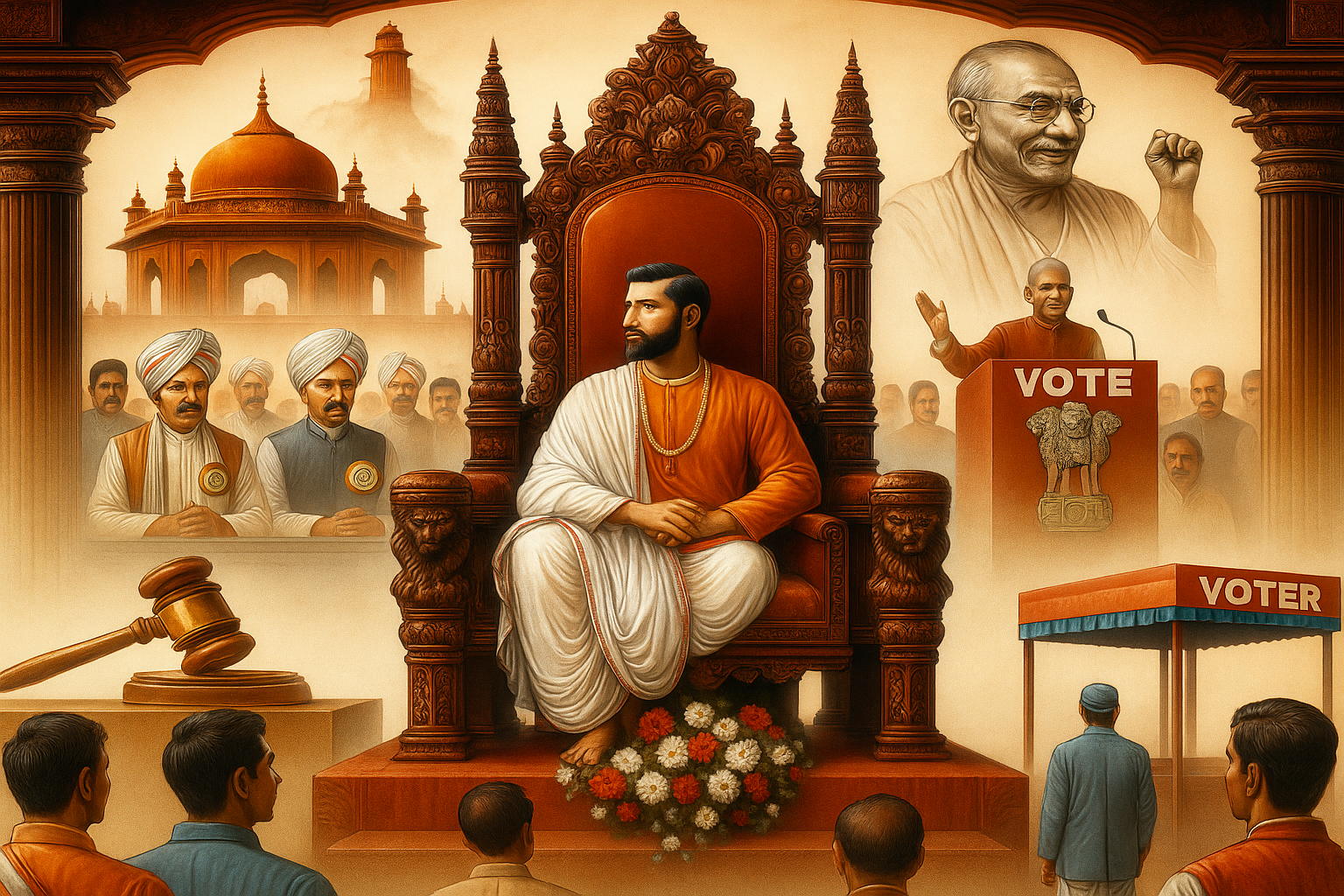
Heir politics, the politics of dynasty, has sculpted the Indian political landscape in which important family houses pass on political power generation after generation. This has been causing great discomfort regarding India’s democratic landscape. As the elections for 2026 draw near, it increasingly becomes pertinent: Is Indian democracy being compromised and is it becoming a modern monarchy where leadership is passed along, not necessarily earned?
Dynasties caught onto the Indian political scene, vividly beginning with the Nehru-Gandhi family. India’s first prime minister, Jawaharlal Nehru, had been Motilal Nehru’s successor in politics in the Congress Party. Even though Jawaharlal Nehru undoubtedly contributed to India’s development, his leadership also marked a significant entry point into the phenomenon of dynastic politics in the post-independence Indian subcontinent. His daughter, Indira Gandhi, won the Congress Party’s internal election and became prime minister after Lal Bahadur Shastri’s sudden demise. This further brought into debate the question of dynasty politics.
Her style of leadership, especially during the Emergency in 1975, provoked the people to protest and criticize her to such an extent that the Janata Party, a new coalition of parties, came into power and, for a time, ended the reign of the Congress. Though Indira’s tenure was marred by controversies, the “Iron Lady” nickname stuck because of her strong handling of key issues. Her assassination in 1984 brought a reluctant Rajiv Gandhi to politics and continued Nehru-Gandhi influence. Rajiv Gandhi’s reign saw significant reforms, especially in telecommunications and governance, but involvement in the Sri Lankan civil war remained a controversy over him. Like his mother, Rajiv Gandhi was also assassinated, which further added to the public’s frustration with dynastic politics. When Sonia Gandhi entered the political fray as Rajiv’s widow after his death, the influence of the Congress Party continued to decline visibly, especially during P.V.Narasimha Rao’s government. Striving opposition parties that voiced public criticism against Congress’s dynastic politics further damaged the party. Rahul Gandhi and Priyanka Gandhi have since moved to stake their claim, but the question of what lies in the future for the Congress Party’s leadership succession remains, all the more so because the BJP presents itself as opposed to dynastic rule. Dynastic politics is not just confined to the national level. Major dynasties still dominate the politics of various states spread all over India. The traditional concerns about democracy at the state level are, therefore, only to an extent more contemporary. Political dynasties play a significant role in all the four quarters of the country.
The Yadav family in Uttar Pradesh in the north has dominated state politics for decades. The Samajwadi Party founder, Mulayam Singh Yadav, cleared the way for his son, Akhilesh Yadav, to become chief minister of the state. In Kashmir, Farooq Abdullah and his son, Omar Abdullah, have dominated the region’s political affairs for many decades.
For years, the Thackeray family of Shiv Sena and Pawar family of Nationalist Congress Party (NCP) have ruled the political space in the western part of the state. Bal Thackeray’s son Uddhav became the chief minister of the state, while Sharad Pawar has transferred his political roles to his daughter Supriya Sule and nephew Ajit Pawar.In the east, from West Bengal, politics has been dominated by the Banerjee family led by the incumbent chief minister Mamata Banerjee, who has managed to keep her party Trinamool Congress (TMC) in control of the state’s administration.
The notable case of a political dynasty in the south is that of the Dravida Munnetra Kazhagam in Tamil Nadu led by M.K. Stalin, son of M. Karunanidhi recently declared that the political heir to Stalin, Udhayanidhi Stalin, once again set the rumblings about the politics of heirs. It is another case of how dynasties penetrate and entrench themselves into state politics similar to what has occurred in other southern states such as Telangana where the Rao family governs through K. Chandrashekar Rao (KCR), his son K.T. Rama Rao and daughter Kavitha. It raises a question for the future of Indian democracy, where political leadership is bestowed as inheritance rather than acquired through merit and public service.
The legacy forces seem to have instilled confidence in many voters who elect them; this also, at the same time, gives an impression to most people that elections are more about family lineage than true democratic choice. This phenomenon of dynasties goes to undermine the very foundations of democracy. In theory, democracy should tend toward leadership based on merit, vision, and ability and not heredity. However in dynastic politics, political power is converted into a family asset passed on like property. Even media coverage focuses attention on the heirs of political families, generating a discourse in which some are considered ‘appointed’ rather than elected. This generates a consciousness among the voters that political office is a right to certain families and a product of democratic elections only for others. Moreover, the concentration of power within such families also results in democratic accountability being further threatened since political leadership is increasingly becoming a career profession within the family rather than one of service to the people.
As India approaches the 2026 elections, issues of dynastic politics will certainly feature at the national level and the state level.Under Rahul Gandhi, this would be a critical test for Congress since it is desperately trying to regain relevance in the wake of a strong BJP as well as other regional parties increasingly positioning themselves against dynastic rule. Those houses that saw the emergence of the DMK and Shiv Sena and Yadav and Pawar families will continue to play an important role, but their trajectory is not certain. Will Indian democracy continue to tolerate and perhaps indulge in heir politics or evolve into a more merit-driven structure?
The election in 2026 might just determine the course of Indian politics. If this trend continues, it may well tear at the very fabric of democratic ideologies in India, relegating democratic realities even further away from democratic principles. Otherwise, when voters begin to give greater importance to merit and vision over family lineage, the future election’s outcome may herald the entry of a new echelon of leadership into the Indian political arena.