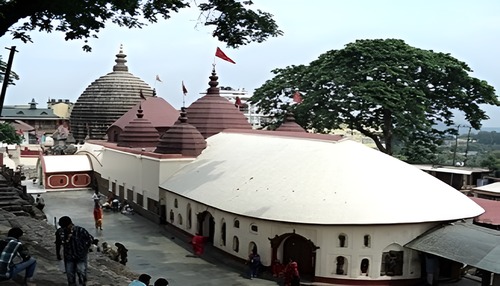
The Kamakhya Temple, located in the Nilachal hills in Guwahati, Assam, brought together around 30 lakh devotees from all over the world for the Ambubachi mela this year, 2024. Ambubachi mela is a three-day festival that celebrates the yearly menstrual cycle of Goddess Kamakhya. Even though the temple remains closed during this period, devotees and sadhus from different places gather to get blessings.
Many people believe that after Sati gave up on her life, Lord Shiva couldn’t accept her death so he began performing Tandava, which means “ the dance of destruction “. Lord Vishnu then divided Sati’s body into 108 pieces to save the world. The Kamakhya Temple, which symbolises the power of women and fertility, was built on the site where Sati’s womb and vaginal part fell. People think that her menstrual blood is holy and can magically heal them. Women who want to get pregnant or have menstrual issues, often come to visit the temple.
The temple is located underground and doesn’t have an idol, instead it worships the female reproductive organ. During the month of June, the river Brahmaputra which flows alongside the temple, turns red. The scientific explanation is that the soil near the river contains a huge amount of iron and cinnabar. However some people say that it’s a divine occurrence since the goddess is on her menstrual cycle. There are several caves and secret canals beneath the temple that are considered sacred, where ancient sadhus meditated and achieved spiritual enlightenment.
Goddess Kamakhya, also known as the Shaktha Tantric Deity, has been famous for black magic since the time of Kamarupa Kings, who were from the Pala Dynasty. They were followers of the Tantrick cult and during their reign, the temple became a famous destination for Tantrikism. There are certain rituals done by Sadhus and Aghoris to get rid of black magic, remove evil spirits and help people who are affected by it. It is believed that a tantric must visit the temple at least once in order to become powerful and reach their full potential
Sacrificing animals like goats and buffaloes is a common practice at the temple, however female animals are not allowed to be sacrificed at all. Views on animal sacrifices at Kamakhya Temple have changed over the past few years. Many devotees and temple officials are beginning to question the rituals as they become more aware about animal rights. Efforts are being made to support alternative rituals and offerings while still respecting the temple’s traditions and cultural history. This includes offerings such as rice and til ( sesame seeds ), as well as symbolic sacrifices include coconut, pumpkins and clay figurines.