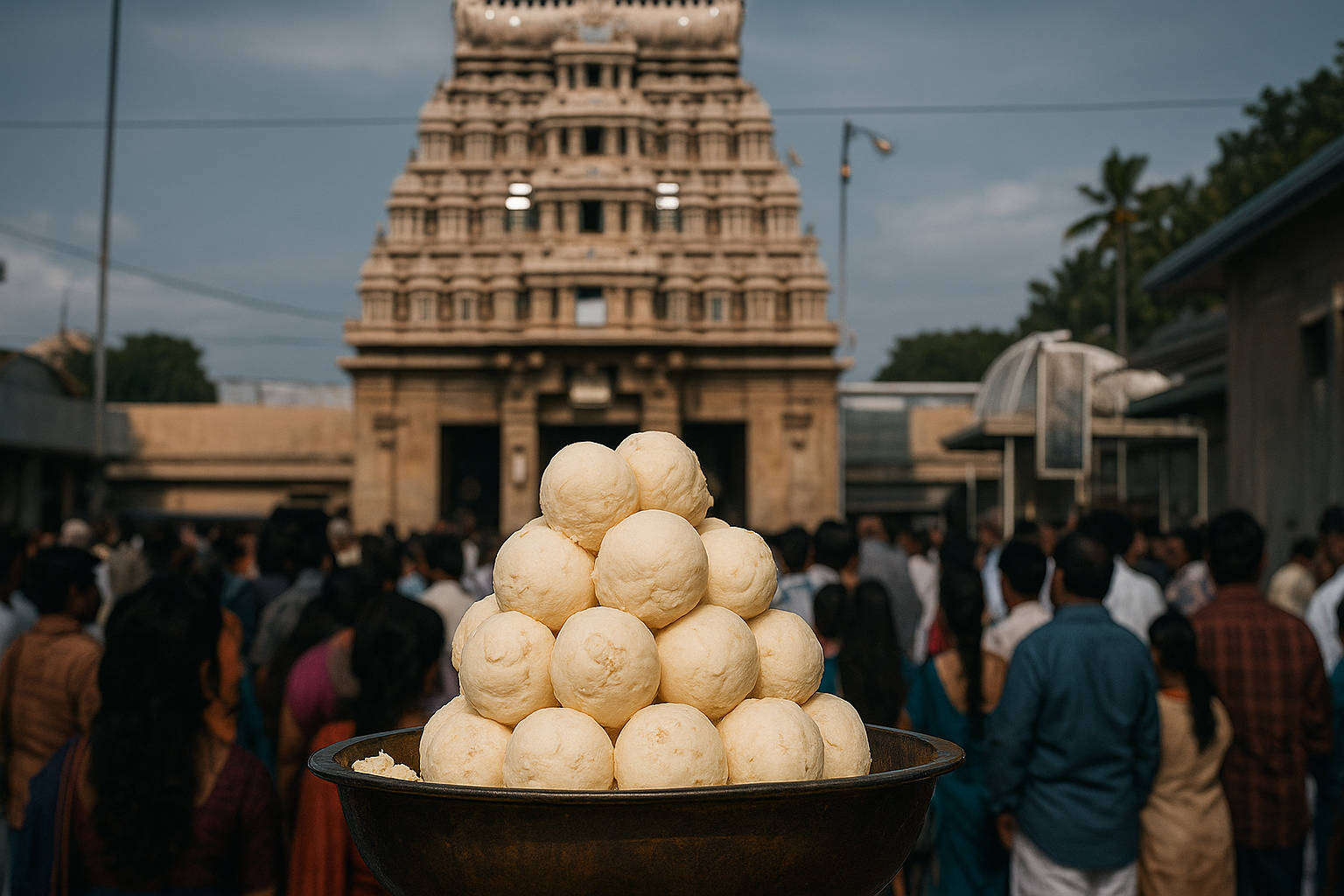
Laddu adulteration at Tirupati Tirumala Temple has become a major topic in Indian political discourse
The Andhra Pradesh Chief Minister, Chandrababu Naidu, has revealed the adulteration of ingredients used to prepare prasadam (food offered to devotees). According to Chandrababu, ingredients used in making prasadam, especially the ghee for the famous Tirupati laddu, have been tampered with. He alleged that fish oil, beef tallow, and lard (pig fat) were added to the ghee, which holds sacred value among devotees. Chandrababu Accused the previous Yuvajana Sramika Rythu Congress Party (YSRCP) government, led by Jagan Mohan Reddy, of corrupting the Tirumala Tirupati Devasthanam (TTD) during his tenure.
Hinduism holds deep reverence for cows, which are worshipped as sacred, and the consumption of beef is considered a sin. India has the largest vegetarian population in the world, with approximately 39 percent of its population identifying as vegetarian, according to a survey by Pew Research Centre 2021. The sanctity of Tirupati, a holy site for millions, amplifies these concerns, especially since meat is strictly prohibited in the temple region. The current controversy has left devotees confused and alarmed about the purity of the food offerings.
The National Dairy Development Board (NDDB), operating under the Ministry of Fisheries, Animal Husbandry, and Dairying, released a report on July 23 from its Gujarat headquarters regarding ghee samples used in Tirupati. The findings shocked devotees and ignited a political controversy.The report stated that the ghee did not meet the basic standards set by the NDDB. It suggested the possible addition of palm oil, fish oil, and both animal and vegetable fats. The NDDB received these test samples from a Tamil Nadu-based dairy company. However, the timing of Chandrababu Naidu’s statement created confusion about the source of the adulteration. The Tirupati police have filed a case against the company involved.
TTD, which procures ingredients through an online tender from the private sector, claimed that the ghee samples were taken from rejected stock. These samples failed TTD’s own tests and did not meet its standards.
Jagan Mohan Reddy strongly denied Naidu’s accusations, claiming that such false statements created panic among devotees and undermined the sanctity of Tirupati. Religion plays a key role in Indian politics, and this controversy has sparked national-level debates on the intersection of politics and religion.
During the inauguration ceremony of the Ayodhya Ram temple, more than 500 Tirupati laddus were distributed to devotees. This gesture stirred conflict among devotees across India, as Ayodhya holds unique religious significance and has been the center of disputes for centuries. The controversy over the laddus led to heated debates in national politics.
Pawan Kalyan, the Deputy Chief Minister of Andhra Pradesh, further intensified the debate. He asserted that the actions taken in Tirupati during the previous government’s tenure were a grave sin and urged the people to seek forgiveness from God. Kalyan announced that he would organize a religious ceremony, Deeksha, as penance, and proposed the formation of the Sanatana Dharma Rakshana Board, which would focus on protecting religious values. However, critics argue that Kalyan is stirring religious sentiments in a secular country, instead of taking concrete steps to resolve the conflict.
In a related incident, the Food and Drug Control Administration (FDCA) in Gujarat seized adulterated ghee worth 14 lakh rupees, amounting to over 3,000 kg, in July. Ghee has become the most commonly adulterated dairy product in India. The demand for ghee far exceeds domestic production, affecting the food industry.
Tirumala produces 3 lakh laddus per day, contributing 500 crore rupees to TTD’s annual income. With a projected revenue of 5,141.74 crore rupees for 2024-25, Tirupati is one of the richest temples in the world.
However, TTD staff have accused the government of providing insufficient funds for operations. While the ghee used for the laddus costs 350 rupees per liter, the market price of high-quality ghee is closer to 1,000 rupees per liter. This gap in cost leads to alterations in the production process, particularly with the laddus. Politicians have framed this issue as a religious matter, which has further escalated tensions. As both religious and political ideologies clash, the conflict over Tirupati laddus has become a national debate