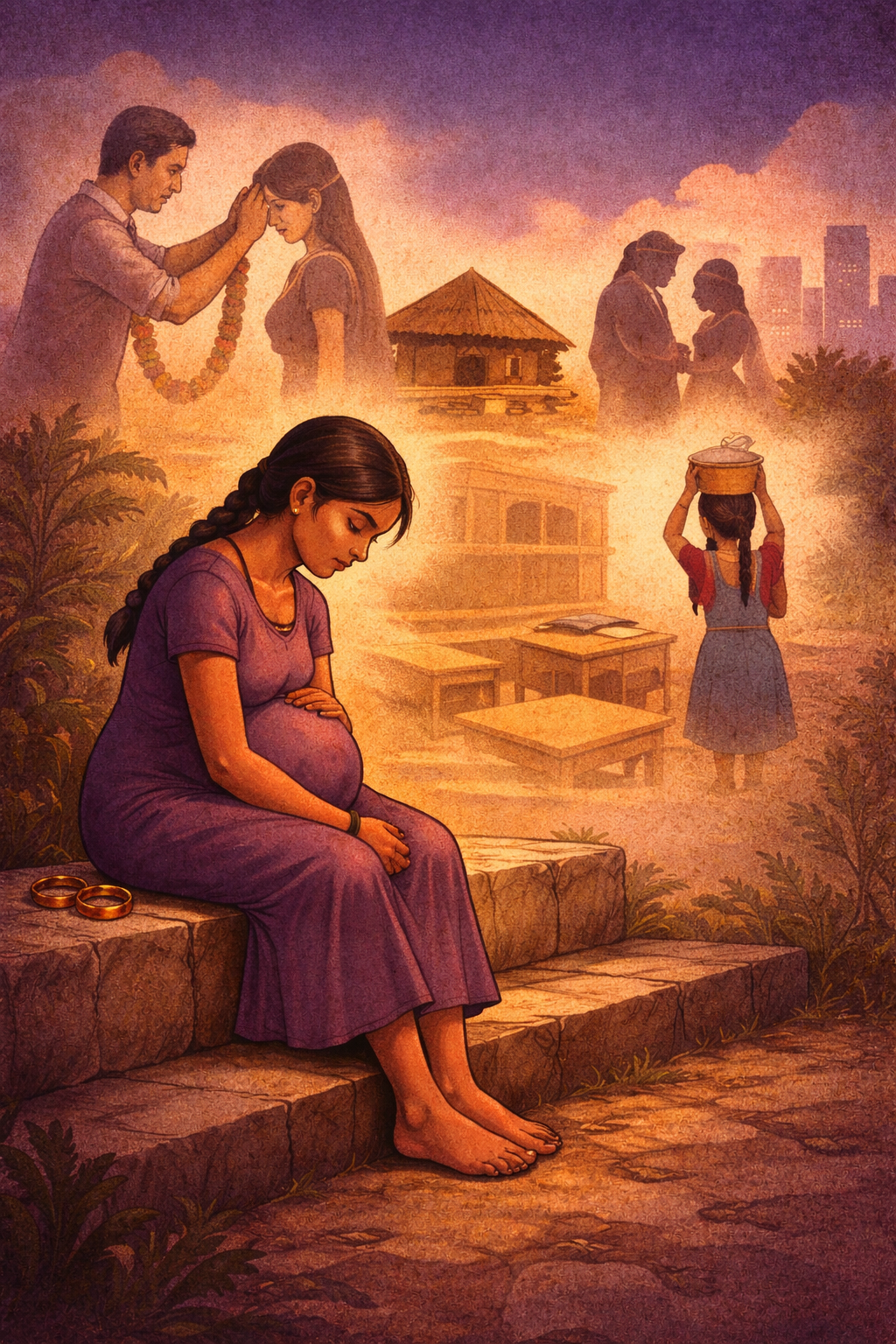
Teenage pregnancy in Tamil Nadu is not just a statistic. Behind every number is a young girl stepping into adulthood much earlier than expected. According to the National Family Health Survey (NFHS-5, 2019–21), 6.3 percent of girls aged 15–19 in Tamil Nadu had begun childbearing, either by giving birth or being pregnant for the first time.
At first glance, this number may seem small. But the data shows clear patterns of inequality.Age makes a big difference. Among girls aged 15–17, only 4 percent had begun childbearing. By age 18, the number rises to 8.2 percent. By 19, it sharply increases to 18.8 percent. This shows that late adolescence is the most vulnerable period.Marriage is the strongest factor. None of the never-married girls reported childbearing. In contrast, 67.5 percent of married adolescent girls had already begun childbearing. This clearly shows that teenage pregnancy in Tamil Nadu is mostly linked to early marriage, not premarital relationships.
Location also matters. In rural areas, 8.1 percent of girls had begun childbearing, compared to 4.2 percent in urban areas. Rural girls often face early marriage, fewer educational opportunities, and limited health services.Social background plays a role too. Teenage childbearing is higher among Scheduled Tribe girls at 10.4 percent, followed by Scheduled Caste girls at 6.6 percent. Girls from socially advantaged groups report lower levels. These differences reflect deeper social and economic inequalities.
Overall, the NFHS-5 findings show that teenage pregnancy in Tamil Nadu is shaped by early marriage, rural disadvantage, and social inequality. Reducing it requires stronger action against child marriage, better access to education, and improved adolescent health services.
Source: National Family Health Survey (NFHS-5), Tamil Nadu State Report, 2019–21.
